








The 2026 FIFA World Cup is one of the world’s largest sporting events. And it’s also a major test of how well operators and digital service providers can support millions of highly connected, mobile-first fans. Drawing on insights from the GSMA Intelligence report, World Cup 2026: Are Operators the Game-Changers? This blog explores what the tournament could mean for travel eSIM for operators, embedded connectivity, and the wider digital fan journey.
With matches taking place across Canada, Mexico, and the US, supporters are relying on their smartphones for far more than messaging. They need access to digital tickets, maps, transport information, payments, translations, match content, and updates throughout their journey. Reliable connectivity is now a core part of the fan experience.
For operators, travel providers, fintechs, and digital platforms, the tournament highlights how eSIM can become the foundation for more seamless international travel experiences.
Major Events Put Mobile Networks Under Pressure
Large sporting events create exceptionally high levels of mobile traffic within a concentrated area.
Verizon customers used 40.32 TB of data in and around the stadium during the most recent Super Bowl Sunday event. For the World Cup, operators across the three host countries have invested in network densification, additional spectrum, small cells, Wi-Fi access points, temporary sites, and improved backhaul capacity. AT&T alone announced over 1,500 network enhancement projects across the 11 US host cities, investing $430 million since 2023, and carried ~1 petabyte of traffic throughout the tournament.
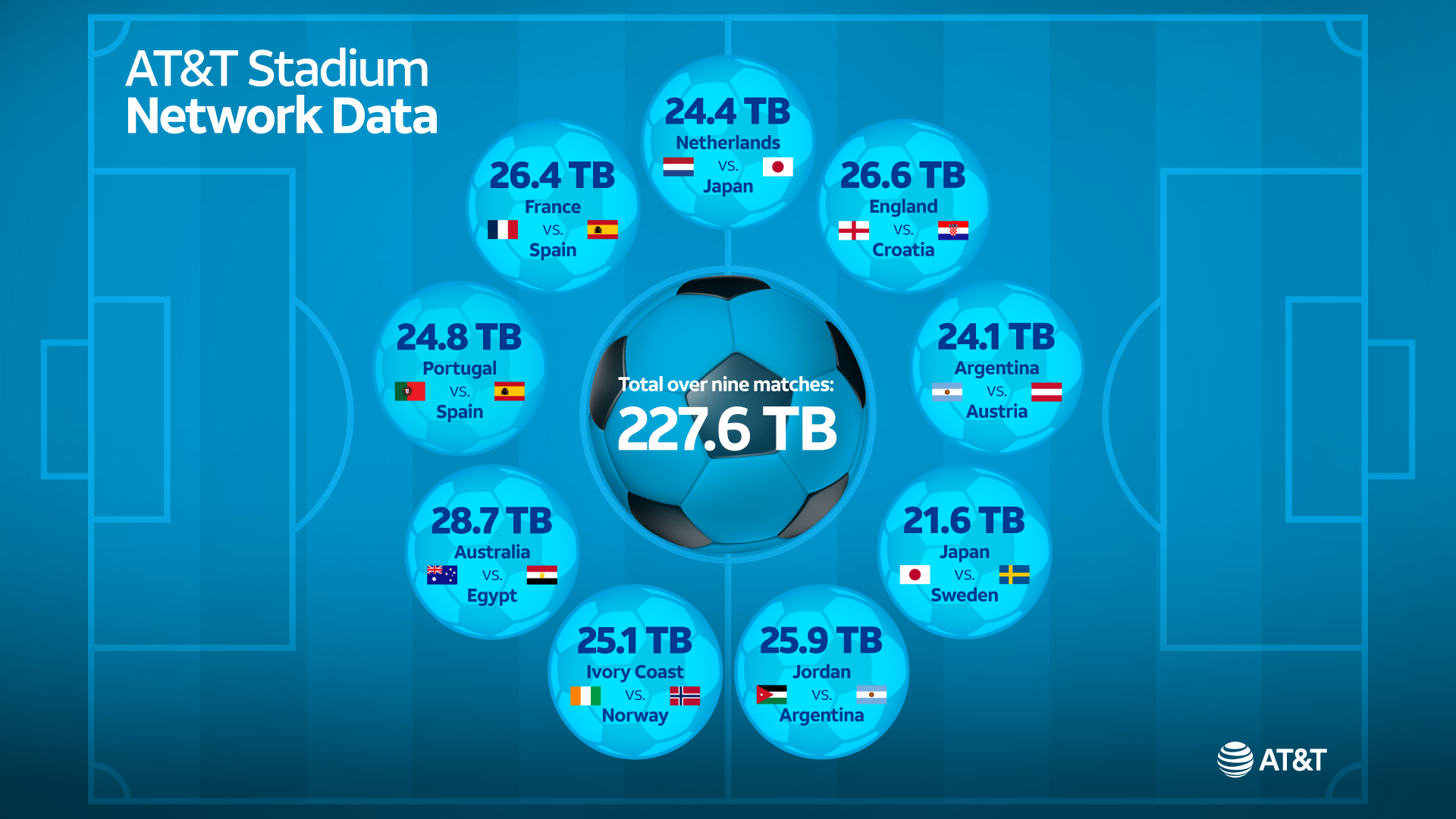 Source: AT&T
These investments are essential for keeping fans connected inside stadiums, airports, city centres, and official fan zones.
However, network capacity is only a part of the opportunity. Operators and digital brands must also consider how fans access connectivity in the first place, particularly when travelling between countries.
Travel eSIM for Operators Removes Friction Before Fans Arrive
Traditional roaming and physical SIM cards can create unnecessary uncertainty for international travellers. Customers may not know how much roaming will cost, whether their existing plan covers roaming, or where to buy a local SIM after landing. Airport Wi-Fi is often unreliable, and buying a physical SIM requires time, identification, and a compatible device. Travel eSIM is a simpler alternative. Fans can purchase a plan before departure, install it digitally, and connect shortly after arriving. There’s no physical SIM swap, retail visit, or delay while searching for connectivity.
According to the GSMA Intelligence Consumer Survey, 12% of consumers who travelled internationally used an eSIM while abroad, and among them, more than 70% purchased their travel eSIM from a telecom operator. This suggests that operators remain well positioned to compete in the travel eSIM market, particularly when they combine connectivity with trust, customer support, and a broader range of services.
The Opportunity Goes Beyond Low-Cost Data
Travel eSIMs are often marketed primarily on price. While competitive pricing matters, competing solely on low-cost data can make it difficult for providers to build sustainable margins or meaningful differentiation. Now, operators have the opportunity to offer something broader.
This could include voice services, customer support, priority network access, guaranteed upload speeds, low-latency plans, or temporary speed boosts for high-demand moments. GSMA Intelligence found that 45% of mobile contract subscribers were interested in speed-based tariffs, indicating that some customers are willing to consider plans based on performance rather than data allowance alone.
For a football fan, this could mean purchasing a plan designed specifically for sharing live content, making video calls, uploading high-quality footage, or accessing match services in a congested area. The strongest propositions should therefore focus on the complete experience and not just the number of gigabytes included.
Connectivity Can Become Part of the Fan Journey
The greatest opportunity may be to embed connectivity directly into the wider travel and event experience.
A fan attending the World Cup may interact with several digital platforms before reaching the stadium, including an airline app, a hotel booking platform, a banking app, an event portal, or a digital ticketing service. Each of these businesses could offer connectivity at a relevant point in the journey.
An airline could offer eSIMs during online check-in. Travel platforms might include connectivity with flights and accommodation. Banks could provide international data with premium accounts or travel rewards. Event apps could integrate eSIM activation with tickets, transport, maps, and notifications. This approach removes the need for customers to search for connectivity separately. Instead, eSIM becomes a natural part of a service they already use.
Previous tournaments have already demonstrated the value of bringing digital services together. During the 2022 World Cup, Ooredoo Qatar presented World Cup fans with the Hayya SIM, which offered 2022 local minutes, 2022 local SMS, and 2022 MB data, valid for three days. Alongside this, FIFA partnered with Hayya to incorporate transport, stadium access, and travel information into the Hayya Card.
Future fan experiences could extend this model by including mobile connectivity from the moment a traveller begins planning their journey.
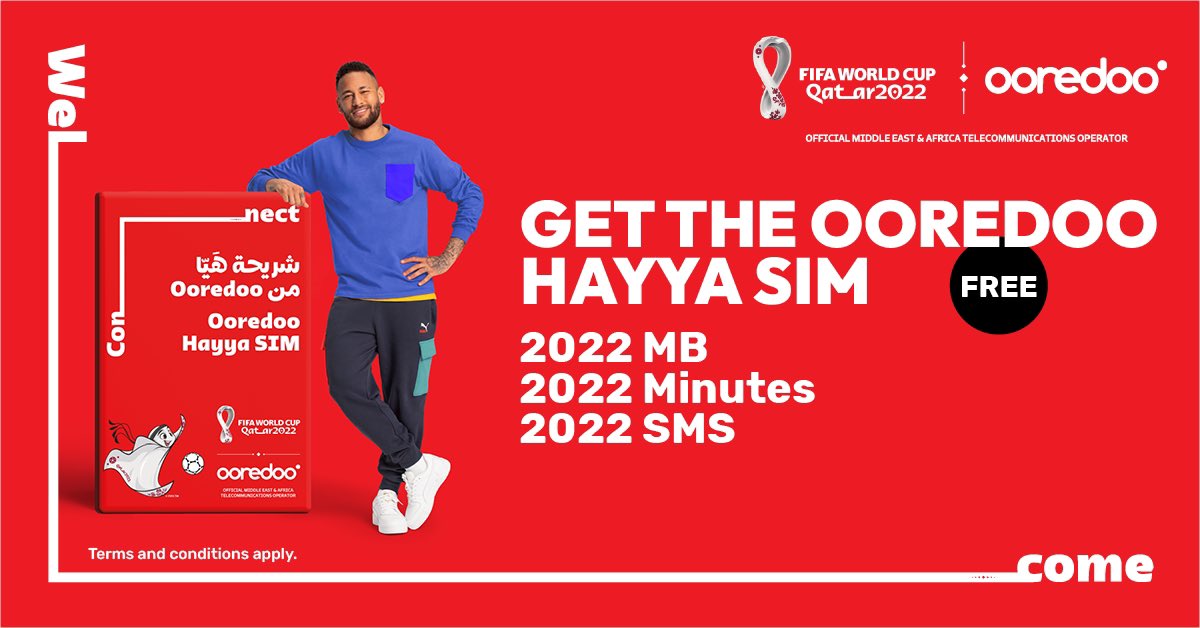 Source: Ooredoo
eSIM Can Support More Personalised Experiences
Once connectivity is delivered digitally, businesses can build more targeted propositions around it.
A supporter travelling for one match may only need a short-term plan. Someone following their team across several cities may require a larger regional package. Families, journalists, content creators, and corporate guests may all have different requirements.
Digital platforms can respond by offering plans based on factors such as:
- Destination and travel dates
- Length of stay
- Expected data usage
- Number of countries visited
- Access to voice or messaging services
- Loyalty status or existing subscriptions
Notifications can also be used to support the customer throughout the journey. A traveller could receive an activation reminder before departure, a welcome message on arrival, usage alerts during the trip, and an option to top up without leaving the app. Transforming eSIM from a one-off purchase into an ongoing digital service.
APIs Will Make Embedded Connectivity Easier to Launch
Businesses don’t necessarily need to become telecom operators to offer these services. Telecom APIs can allow airlines, travel providers, fintechs, retailers, and digital platforms to integrate connectivity into their existing apps and websites.
Through APIs, businesses can connect customer onboarding, payments, product catalogues, eSIM inventory, activation, notifications, and analytics. They can then design the customer journey around their own brand rather than redirecting users to a separate telecom provider. This makes it possible to test new propositions around specific events, destinations, or customer segments without building an entire telecom platform from the ground up.
For major events such as the World Cup, businesses could launch limited-duration connectivity packages, loyalty rewards, premium fan plans, or bundled travel services. The same infrastructure could then support future tournaments, festivals, conferences, and seasonal travel campaigns.
The World Cup Is a Glimpse of What Comes Next
The 2026 World Cup highlights a wider change taking place across telecoms. Customers increasingly expect connectivity to be instant, digital, and available within the services they already use. They don’t necessarily want to visit a store, wait for a physical SIM, or manage a complicated roaming process.
Travel eSIM provides the technology to remove these barriers. The larger opportunity lies in combining it with payments, content, loyalty, notifications, voice, and personalised digital journeys. Travel eSIM for operators creates new ways to differentiate beyond traditional roaming. For travel brands and digital platforms, they provide an opportunity to add a valuable service while improving the customer experience.
The future of travel connectivity won’t simply be about selling data. It will be about making connectivity a seamless part of the journey.
Launch Travel Connectivity With HERO® Travel Suite
HERO® Travel Suite helps operators and digital brands launch, manage, and scale travel connectivity services through a single modular platform.
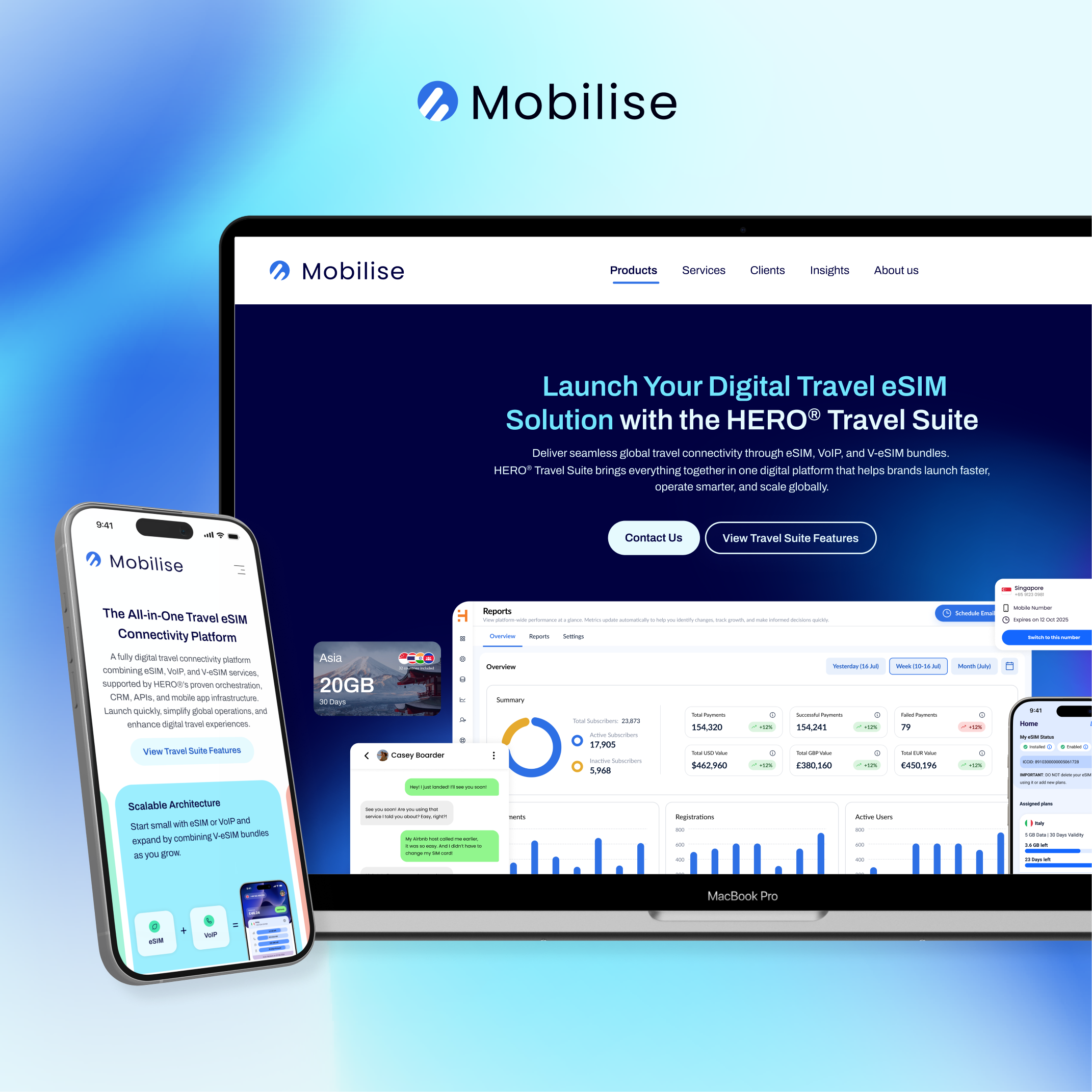
Combining eSIM, VoIP, V-eSIM, APIs, payments, CRM, analytics, websites, and mobile apps, HERO® Travel Suite provides the tools needed to build connected travel experiences under your own brand.
Explore HERO® Travel Suite here.
Frequently Asked Questions
Why is travel eSIM especially important for fans attending the 2026 World Cup across the USA, Canada, and Mexico?
The tournament spans three countries and millions of mobile‑first fans will depend on their phones for tickets, maps, transport, payments, translations, and live updates. Travel eSIM lets supporters buy and install a plan before departure and connect on arrival—avoiding store visits, physical SIM swaps, uncertain roaming fees, or unreliable airport Wi‑Fi. With fans comparing options long before they fly, reliable, instant connectivity becomes a core part of the overall fan experience.
How are operators preparing networks for World Cup‑scale demand, and why does the access method still matter?
Major events create concentrated data surges—Verizon reported 40.32 TB used in and around a recent Super Bowl, and operators for 2026 are investing in densification, small cells, added spectrum, temporary sites, Wi‑Fi, and back haul. AT&T alone announced 1,500+ enhancement projects across 11 US host cities and $430M in investment, carrying roughly a petabyte of traffic during the tournament. Yet capacity is only part of the challenge; fans also need an easy way to get online across borders. Travel eSIM removes that front‑end friction, ensuring people can actually access the upgraded networks the moment they land.
Are operators well positioned in the travel eSIM market, and how can they differentiate beyond low‑cost data?
Yes. GSMA Intelligence reports that 12% of international travellers used an eSIM abroad, and over 70% of those bought it from a telecom operator—reflecting trust, support, and brand recognition. To stand out, operators and partners can go beyond price by offering voice services, responsive customer support, priority access, guaranteed upload speeds, low‑latency or speed‑boost options, and performance‑based plans. With 45% of contract subscribers interested in speed‑based tariffs, there’s room to tailor plans for high‑demand moments like sharing live content, video calling, or uploading match footage in congested areas.
How can connectivity be embedded into the wider fan journey, and what role do APIs play?
Connectivity can be offered at natural touchpoints across travel and event services—airlines at online check‑in, travel platforms bundling data with flights and hotels, banks including international data in premium accounts, and event apps tying eSIM activation to tickets, transport, maps, and notifications. Telecom APIs make this practical without becoming a full operator: brands can integrate onboarding, payments, catalogues, eSIM inventory, activation, notifications, and analytics into their own apps. This enables rapid, branded launches (e.g., limited‑duration fan packages, loyalty rewards) for events like the World Cup and reuse of the same stack for future tournaments and campaigns.
What is HERO® Travel Suite and how does it help brands launch travel connectivity?
HERO® Travel Suite is a modular platform for operators and digital brands to launch, manage, and scale travel connectivity under their own brand. It brings together eSIM, VoIP, V‑eSIM, APIs, payments, CRM, analytics, websites, and mobile apps—so teams can design seamless, personalized fan journeys, support cross‑border use cases, and turn connectivity into an integrated digital service rather than a one‑off data purchase. Explore HERO Travel Suite to learn how to get started.