










From Jio’s $108 billion valuation to AI-driven infrastructure economics, 6G investment and the changing role of MVNOs — ten developments that reveal how the telecom industry is evolving.
The telecommunications industry is entering an interesting period of transition.
For much of the past decade, the industry’s strategic focus has been relatively straightforward: expand 4G and 5G coverage, acquire subscribers, increase data consumption and improve operational efficiency.
That model is now being challenged from several directions. Artificial intelligence is creating new demand for network infrastructure while simultaneously increasing equipment costs. Operators are reassessing which markets and technologies they want to compete in. New mobile brands are finding opportunities to differentiate without owning physical networks. And the industry is already preparing for 6G, even as questions remain about the commercial returns from 5G.
Ten developments from 12–18 October illustrate some of the strategic trends shaping telecommunications.
1. Jio’s $108 Billion Valuation Demonstrates the Value of Scale and Digital Platforms
Reliance Industries published the prospectus for Jio Platforms’ planned IPO, targeting proceeds of up to $3.2 billion at an implied valuation of approximately $108 billion. Jio serves more than 533 million mobile subscribers, including approximately 285 million 5G customers. Its latest quarterly results showed revenue of around $4.8 billion, with an EBITDA margin exceeding 53%.
The more interesting aspect of Jio is its business model. It has combined massive investment in network infrastructure with an expanding ecosystem of digital platforms, content, cloud and enterprise services.
Why do some telecom operators attract substantially higher valuations than others? Scale and profitability matter, but so does the ability to build additional revenue streams around connectivity. Jio offers a compelling example of what can happen when connectivity forms the foundation of a broader digital ecosystem.
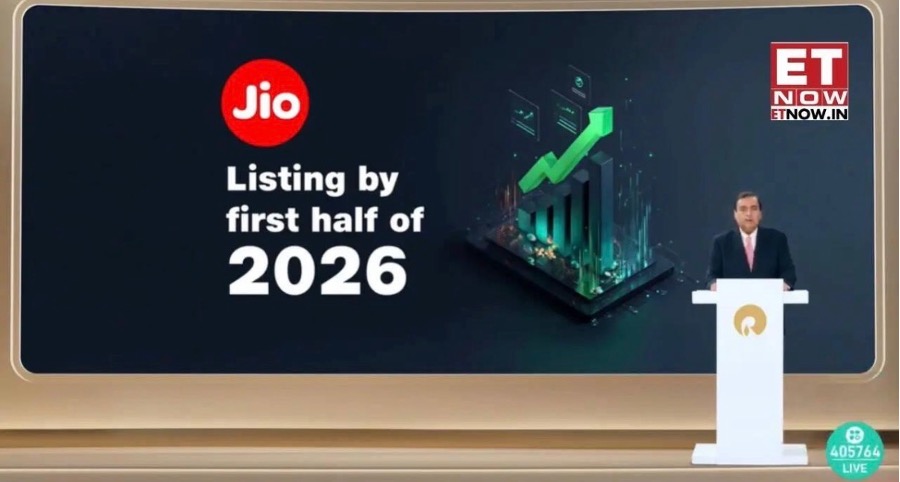 Source: ET Digital broadcast via YouTube.
2. AT&T’s Exit from Mexico Reflects a Renewed Focus on Capital Efficiency
AT&T announced the sale of its Mexican mobile business to Grupo Televisa and Fintech Holding for approximately $2 billion. The business serves almost 24 million customers, but AT&T has decided to concentrate its resources on the US market, particularly its converged fibre and wireless strategy.
Historically, many operators pursued geographic expansion to build scale. Today, management teams are increasingly focused on returns on invested capital and whether individual assets genuinely strengthen their competitive position.
The lesson is that growth is not simply about serving more customers or operating in more countries. It is about allocating capital where a company can create the greatest value.
3. Ericsson’s Results Highlight the Challenge Facing Network Equipment Vendors
Ericsson reported stronger-than-expected third-quarter results, with revenue reaching SEK 59.5 billion, representing 7% organic growth. Its mobile network hardware business performed particularly well, supported by demand in India and Japan.
Yet the broader radio access network market remains relatively flat, while rising component costs could pressure margins. Operators still invest in capacity and modernisation, but are increasingly reluctant to commit to major programmes without clear commercial returns.
Vendors must demonstrate how their technology improves the economics of existing networks: better utilisation, performance, energy efficiency and operations. AI-driven network optimisation could be particularly valuable in this environment.
4. Verizon and Ericsson Begin Real-World 6G Testing
Verizon and Ericsson completed an outdoor pre-standard 6G field call using the 7 GHz spectrum band. The demonstration tested coverage, throughput, latency and signal propagation under real-world conditions.
The technical progress is encouraging. Commercially, however, the industry faces a familiar challenge: successive generations deliver better performance, but the relationship between network investment and incremental operator revenue is increasingly difficult to establish.
For 6G to justify another investment cycle, it must enable valuable services such as AI-native networks, integrated sensing, distributed computing, industrial automation and terrestrial/satellite integration. The critical question is not only what 6G can do, but who will pay for it and why.
 Source: Fierce Network
5. Nokia’s Private Wireless Sale Highlights the Importance of Strategic Focus
Nokia agreed to sell its Enterprise Campus Edge business to Aurelius. The unit provides private wireless connectivity, industrial edge computing and related applications to almost 900 enterprise customers.
This may seem surprising given the enthusiasm around private 5G. But an attractive market does not mean every vendor is best positioned to compete in it. Industrial customers need integration with operational technology, applications, security and managed services — not just network equipment.
Nokia’s decision suggests a sharper focus on areas where it believes it can generate the strongest returns. More specialisation across the telecom technology stack may follow.
6. Orange’s New Submarine Cable Shows Why Fibre Remains Critical to the AI Economy
Orange, Equitix and MDM established a joint venture to develop Pisces, a planned 3,125-kilometre submarine cable linking Ireland, France, Spain and Portugal. The project aims to provide additional capacity and route diversity between important European digital infrastructure markets.
Much of the AI discussion focuses on models, GPUs and compute. Yet AI workloads also require enormous quantities of data to move between computing environments. Fibre, optical transport, subsea cables and data-centre interconnection remain essential.
There is also a sovereignty dimension: governments increasingly regard international communications routes as strategic infrastructure. Projects such as Pisces address both capacity and resilience.
 Pisces proposed submarine cable route connecting Ireland, France, Spain and Portugal. Source: Data Centre Dynamics
7. Vodafone’s 15-Day Connectivity Proposition Shows the Value of Operational Simplicity
Vodafone Business launched Express Capacity, designed to provide eligible 100G and 400G optical connections between major European network hubs within 15 days.
For enterprises connecting data centres or deploying AI infrastructure, provisioning time can be as important as capacity. Vodafone is competing on the operational delivery experience, not simply technical specifications.
Cloud services have established expectations around rapid provisioning, flexibility and self-service. Connectivity needs to become easier to consume, and operators that simplify ordering, provisioning and support can differentiate without changing the underlying network.
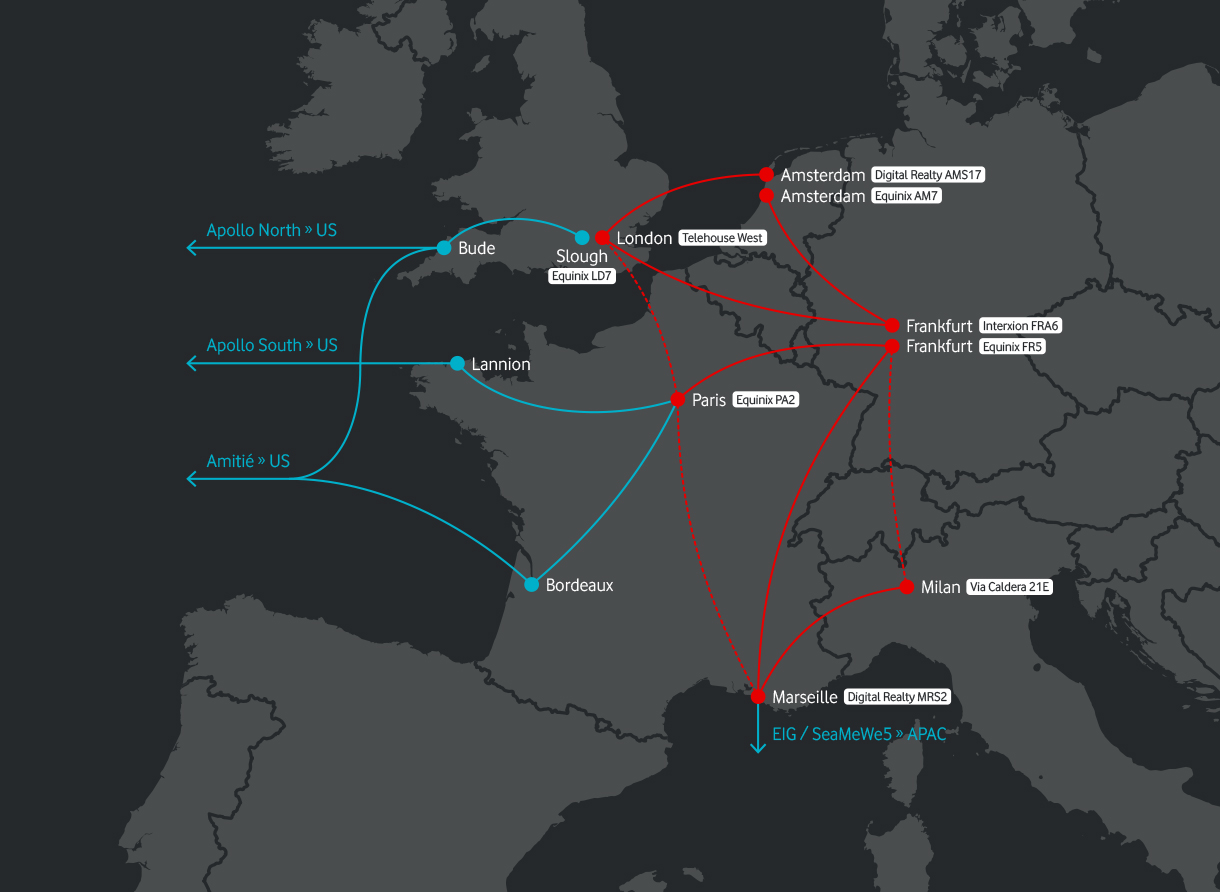 Source: Vodafone
8. Network-Based Authentication Demonstrates the Commercial Potential of Telecom APIs
Indian fraud-prevention company Bureau introduced Silent Mobile Verification, which authenticates users through mobile network intelligence rather than traditional SMS one-time passwords. The service verifies the relationship between mobile number, SIM and device through operator capabilities.
This illustrates how operators can monetise assets beyond connectivity. Networks hold valuable information relating to identity, SIM status, number verification and device association. Secure APIs allow selected capabilities to be used by external applications.
Financial services is an attractive market because the value of reducing fraud and authentication friction is clear. The opportunity is to make existing network capabilities accessible, secure and commercially useful.
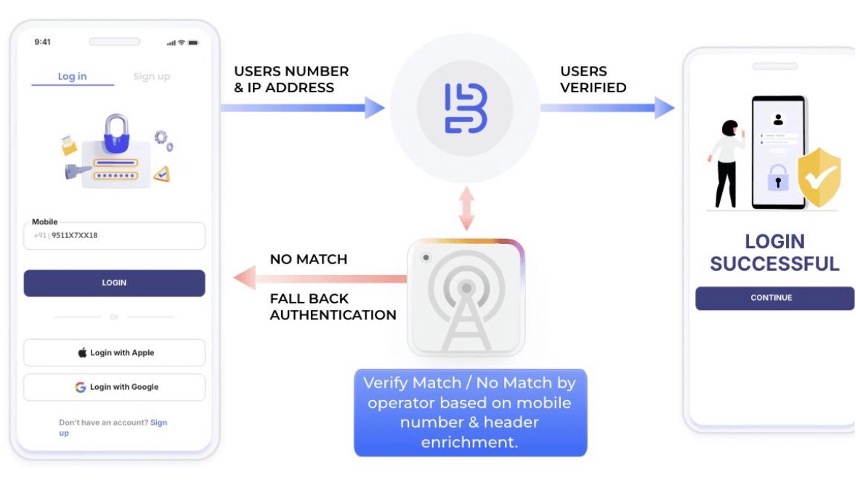 Bureau network-based mobile verification flow, showing successful verification and fallback authentication. Source: Bureau
9. A New French MVNO Shows That Differentiation Goes Beyond Price
French mobile provider Meowan entered the market using Orange’s radio network, offering eSIM support and roaming-focused mobile propositions. It says it operates its own mobile core while relying on Orange for radio access.
Historically, many MVNOs competed primarily on price. That is difficult in markets where mobile data is already inexpensive. More promising differentiation may come from international roaming, flexible subscriptions, family connectivity, travel products or industry-specific needs.
As eSIM and wholesale platforms simplify mobile service launches, more businesses can build propositions around distinct customer needs. Competitive advantage increasingly sits in the customer proposition rather than ownership of the radio network.
 Source: Meowan
10. The AI Memory Shortage Creates an Unexpected Challenge for Mobile Adoption
IDC reported a substantial decline in global smartphone shipments during the third quarter of 2026, with rising memory-component costs contributing to pressure on device manufacturers. Demand from AI infrastructure is absorbing manufacturing capacity and raising prices for components also used in smartphones.
That creates a contradiction: AI drives demand for networks and computing infrastructure, while potentially making the devices used to access those networks more expensive.
Operators depend on affordable devices to attract customers, encourage upgrades and increase data consumption. The effects of AI must be considered across the full value chain, not only through opportunities for network infrastructure and automation.
Three Strategic Themes Emerging from the News
1. Operators are becoming more selective about what they own
AT&T’s exit from Mexico and Nokia’s private wireless divestment show that owning more assets does not necessarily create more value. Infrastructure sharing, wholesale platforms, specialist providers and external capital create alternatives to full vertical integration. The question is which layers create genuine competitive advantage and which can be delivered better through partners.
2. AI will reshape both telecom costs and revenue opportunities
AI is creating demand for fibre, transport, compute and capacity while opening opportunities to automate operations and improve performance. It also introduces component-cost pressure, complexity and governance requirements. Successful operators will approach AI as a measurable business transformation rather than another technology experiment.
3. The commercial value of connectivity is moving beyond the network
Meowan, Bureau and Vodafone illustrate different aspects of the same trend: value is increasingly created by making network capabilities accessible and useful. Differentiated propositions, authentication APIs and rapid enterprise provisioning turn infrastructure into outcomes customers will pay for.
The Bigger Picture: A More Modular Telecom Industry
For decades, the mobile industry largely followed: Spectrum → Network → SIM → Customer
The model is evolving towards: Infrastructure → Connectivity → Orchestration → Network Capabilities → Digital Services → Customer
An MNO can concentrate on infrastructure; an MVNE can simplify integration and commercial operations; an MVNO can focus on customer experience; and enterprise applications can consume identity, security and quality-of-service capabilities through APIs. AI can help automate the processes connecting these layers.
Not every company needs to own every component. The strongest businesses may be those that know where they differentiate and make it easy for partners to provide the rest.
Final Thoughts
The telecom industry is not running out of opportunities. But the sources of growth are changing. Coverage, subscriber acquisition and data consumption remain important, yet the next phase is increasingly about making connectivity more intelligent, programmable, accessible and easier to integrate into other products and services.
The companies that succeed will make a complex infrastructure environment feel simple to the customer. The future of telecom may not be defined by who owns the most network infrastructure, but by who is best able to turn that infrastructure into services customers genuinely value.